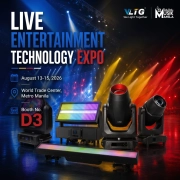
VLTG is preparing to meet lighting professionals at Musik Manila 2026, taking place from August 13–15, 2026, at the World Trade Center Metro Manila in the Philippines.
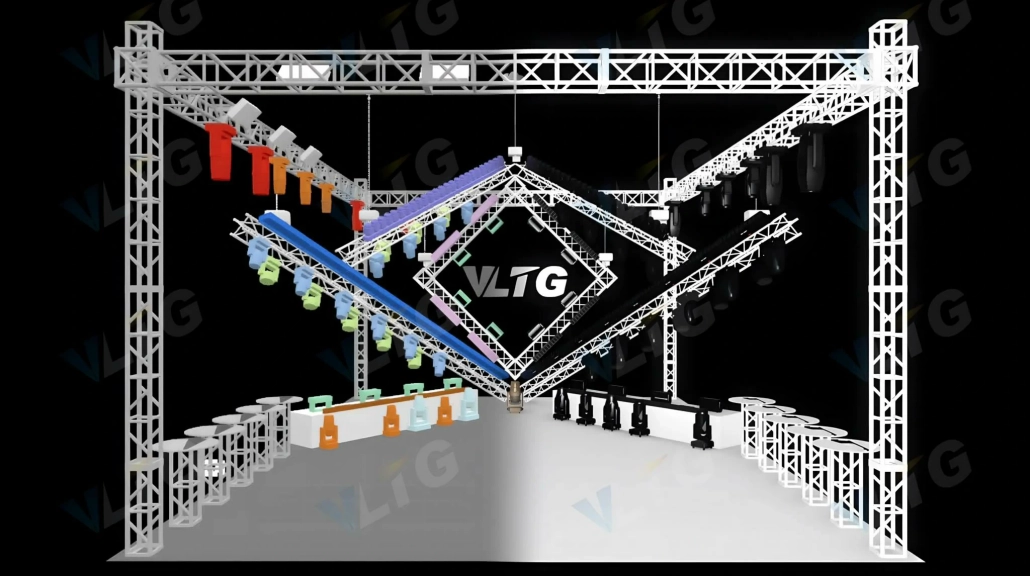
This year, we are bringing more than just stage lighting equipment to the show. In addition, we have built a dedicated stage lighting showcase at Booth D3. Visitors can experience our lighting effects in a live exhibition environment.
📅 August 13–15, 2026 📍 World Trade Center, Metro Manila 📌 Booth D3
Behind the Scenes at Musik Manila 2026
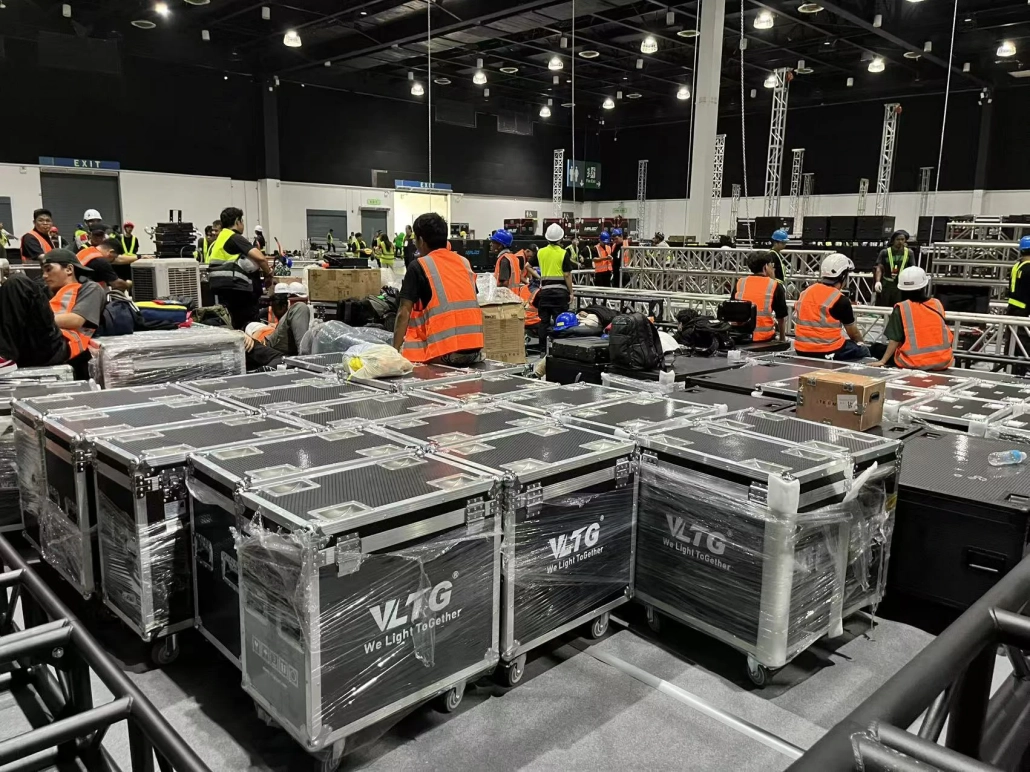
Our team is currently completing the rigging, fixture installation, lighting setup, and final adjustments for the showcase.
From the initial setup to the final lighting programming, every detail is being prepared to create a complete professional stage lighting experience for visitors.
As a stage lighting manufacturer, we believe that seeing lighting equipment working in a real stage environment provides a much better understanding of its performance than simply viewing product specifications.
A Live Stage Lighting Experience
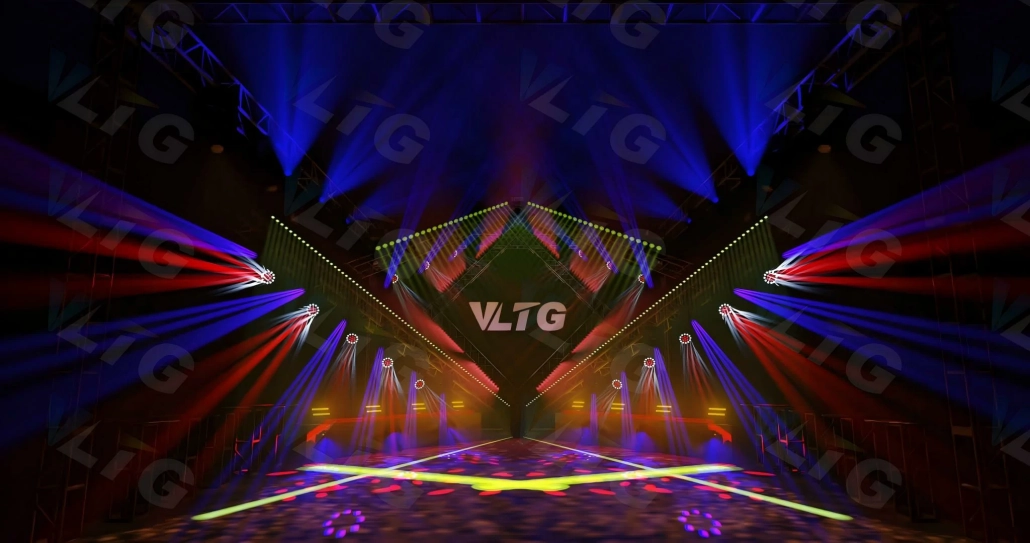
At Booth D3, visitors will be able to experience our live stage lighting showcase and see the lighting effects in action.
The setup brings together professional moving head lights and other lighting equipment. Together, they demonstrate how different fixtures work together in a complete stage production.
The showcase is designed around real-world applications such as concerts, live events, entertainment venues, and other professional productions.
For lighting designers, rental companies, event production teams, and industry professionals, Musik Manila 2026 is also an opportunity to meet directly with a China stage lighting manufacturer and discuss specific lighting requirements and potential cooperation.
Meet VLTG at Musik Manila 2026
If you are attending Musik Manila 2026, we warmly invite you to visit VLTG at Booth D3 and experience the stage lighting showcase for yourself.
Come by, see the lights in action, and talk with our team about your upcoming projects, stage lighting solutions, and cooperation opportunities.
August 13–15, 2026 World Trade Center Metro Manila, Philippines Booth D3
We look forward to seeing you at Musik Manila 2026.
When evaluating a professional LED moving head light, most buyers focus on output, CRI, zoom range, or framing shutters.
While these specifications are important, one feature often has an even greater impact on the final visual result: the CMY color mixing system.
For theaters, broadcast studios, churches, and high-end performance venues, color quality isn’t simply about producing saturated colors. It’s about creating smooth fades, accurate hues, and consistent illumination that looks natural both to the audience and on camera.
Not all CMY systems achieve that in the same way.
Today, many professional LED moving head lights use one of two CMY designs: rotary CMY and shutter CMY. Understanding the difference can help you choose the right fixture for your application.
What Is CMY Color Mixing?
Unlike traditional color wheels that switch between fixed colors, a CMY system creates virtually unlimited colors by combining three subtractive filters:
Cyan
Magenta
Yellow
By adjusting how much each filter enters the optical path, a fixture can produce smooth color transitions and a much wider color palette.
This is why CMY color mixing has become a standard feature in professional LED moving head lights used in theaters, television studios, churches, concert halls, and live productions.
How Does Rotary CMY Work?
A rotary CMY system mounts the three color filters on a single rotating wheel. Different colors are created by rotating the filters to overlap at different angles.
The design is relatively simple and cost-effective, making it common in entry-level fixtures.
However, this approach also has limitations.
Because all three filters share the same rotating mechanism, color changes can be less fluid, particularly during slow fades. In demanding applications, users may also notice slight color inconsistency or uneven blending when multiple filters overlap.
For venues where precise color reproduction is not a priority, these compromises may be acceptable.
How Does shutter CMY Work?
A shutter CMY system takes a different approach.
Instead of mounting the filters on a rotating disc, each color filter moves independently along a shutter path, typically driven by its own precision motor.
This allows each filter to be positioned with much greater accuracy, giving the lighting console finer control over color mixing.
The result is:
Faster color transitions
Smoother fades between colors
More uniform beam output
Greater color consistency
Higher repeatability during programming
For productions that rely on subtle color changes rather than dramatic jumps, these differences become immediately noticeable.
Why Does CMY Design Matter?
The difference between rotary and shutter CMY becomes most apparent in environments where image quality is critical.
Theaters
Stage productions often depend on gradual color transitions to support storytelling and mood. Smooth fades help create a more natural visual experience without distracting the audience.
Broadcast Studios
Television cameras reveal inconsistencies that may not be obvious to the naked eye. Stable color mixing helps reduce visible banding and ensures more accurate color reproduction on screen.
Churches
Modern worship spaces increasingly use dynamic lighting to enhance services. Quiet, consistent color transitions contribute to a more immersive atmosphere without drawing attention to the lighting itself.
Concert Halls & Performing Arts Centers
Opera houses, concert halls, and performing arts venues require fixtures capable of delivering repeatable color performance across multiple productions. Consistency is just as important as brightness.
5 Things to Know About CMY Color Mixing Before Choosing an LED Moving Head Light
Before investing in a professional LED moving head light, consider these five factors that have the greatest impact on real-world color performance.
1. How Is the CMY System Designed?
Not all CMY systems work the same way. Rotary CMY relies on a rotating mechanism, while linear CMY uses independently controlled filters that provide finer adjustment and greater precision.
2. How Smooth Are the Color Transitions?
For theaters, television studios, and live productions, smooth fades are often more important than rapid color changes. A high-quality CMY system should produce seamless transitions without visible stepping or abrupt shifts.
3. Is the Beam Color Uniform?
Uneven color mixing can create hotspots or inconsistent color across the beam. Professional fixtures are designed to maintain uniform illumination throughout the entire color range.
4. Can It Deliver Repeatable Results?
Lighting programmers expect fixtures to reproduce the same colors every time a show is recalled. A stable CMY system improves programming accuracy and ensures consistent performance across multiple productions.
5. Does It Match Your Application?
Different venues have different priorities.
Entertainment venues and clubs often prioritize dynamic effects and cost efficiency.
Theaters require smooth fades and accurate color rendering.
Broadcast studios demand consistent colors that look natural on camera.
Churches and performing arts venues benefit from precise, repeatable color control for immersive lighting experiences.
Choosing the right CMY system ultimately depends on the performance requirements of your venue rather than specifications alone.
Why Professional Manufacturers Choose Linear CMY
As expectations for stage lighting continue to increase, many manufacturers are adopting shutter CMY systems in their premium LED moving head lights.
Rather than simply increasing brightness, today’s leading lighting brands are placing greater emphasis on color precision, smooth dimming, silent operation, and long-term consistency.
Companies such as VLTG have followed this direction in the development of the Varytic Series, utilizing a shutter CMY system to meet the demanding performance requirements of theaters, broadcast studios, churches, and other professional venues where color quality is essential.
This reflects a broader trend across the professional lighting industry: engineering products around real-world performance rather than specifications alone.
How to Choose the Right LED Moving Head Light
When comparing professional fixtures, it’s worth looking beyond wattage and beam angle.
Ask questions such as:
Does the fixture use rotary or shutter CMY?
How smooth are the color transitions?
Is the beam uniform across the entire color range?
Can the fixture reproduce colors consistently from one show to the next?
Is it designed for theater, broadcast, house of worship, or live entertainment applications?
The answers to these questions often have a greater impact on the final production than brightness alone.
Conclusion
CMY color mixing is one of the defining technologies behind today’s professional LED moving head lights.
While both rotary and shutter systems are capable of producing a wide range of colors, linear CMY offers greater precision, smoother transitions, and more consistent performance in demanding environments.
For applications such as theaters, broadcast studios, churches, concert halls, and performing arts venues, these advantages can make a visible difference both on stage and on camera.
Choosing the right CMY system is ultimately about selecting a fixture that delivers the color consistency, precision, and performance your productions demand.
https://vltglight.com/wp-content/uploads/2026/07/cmy.webp750750meganshihttps://vltglight.com/wp-content/uploads/2020/05/LOGO.-1-300x151.pngmeganshi2026-07-28 08:49:132026-07-28 08:49:155 Things to Know About CMY Color Mixing Before Choosing an LED Moving Head Light
Outdoor concerts place unique demands on stage lighting. Unlike indoor venues, lighting fixtures must withstand rain, dust, humidity, and changing temperatures while delivering consistent brightness throughout the show.
For rental companies, production houses, distributors, and event organizers, choosing the right IP65 beam moving head light is about much more than output power. Reliability, structural design, maintenance, and long-term operating costs all play an important role.
In this guide, we’ll explore seven recommendations professionals consider before investing in outdoor moving head lighting, along with answers to some of the most frequently asked questions from buyers.
Why More Outdoor Productions Are Choosing IP65 Beam Moving Head Lights
Outdoor performances have grown significantly over the past decade, from music festivals and touring concerts to sporting events and cultural celebrations.
Unlike conventional indoor fixtures, an IP65 beam moving head light is designed to operate in environments where rain, dust, and moisture are unavoidable.
This level of environmental protection helps reduce unexpected downtime and allows production teams to focus on delivering the show instead of worrying about equipment performance.
For professional users, dependable operation is just as important as beam intensity.
1. Choose Brightness Based on Your Venue
Higher wattage does not always mean better performance.
A medium-sized outdoor stage may not require the same output as a stadium concert.
Professional buyers usually select fixtures based on:
Throw distance
Stage size
Ambient lighting
Audience viewing distance
Matching fixture performance to the venue helps improve visual effects while keeping operating costs under control.
2. Prioritize Reliable Environmental Protection
Outdoor lighting fixtures face constant exposure to challenging conditions.
A professional waterproof moving head light should feature:
Sealed housing
Waterproof connectors
Precision sealing technology
Durable exterior construction
Reliable protection helps reduce maintenance while improving operational confidence during unpredictable weather.
3. Look for Compact Structural Design
Modern moving head light manufacturers are placing increasing emphasis on compact engineering rather than simply reducing fixture weight.
A well-designed fixture offers several practical advantages:
More efficient transportation
Easier installation
Better truss utilization
Improved handling during touring
For rental companies managing dozens or even hundreds of fixtures, compact structural design can significantly improve logistics and labor efficiency.
4. Evaluate Thermal Management
Outdoor events often require lighting fixtures to operate continuously for many hours.
A stable cooling system helps maintain:
Consistent beam intensity
Longer component lifespan
Lower failure rates
Reduced maintenance costs
Experienced stage lighting manufacturers invest heavily in thermal design because long-term reliability is just as important as optical performance.
5. Consider the Manufacturer, Not Just the Product
Many buyers focus only on specifications.
However, selecting an experienced China stage lighting manufacturer can provide additional advantages, including:
Stable production quality
Engineering support
International certifications
OEM & ODM services
Long-term technical assistance
A reliable manufacturing partner often becomes an important part of a distributor’s long-term business strategy.
Not every outdoor event requires the same type of beam moving head light.
For example:
Medium-sized events often benefit from compact, energy-efficient fixtures.
Large concerts and touring productions typically require higher-output beam fixtures capable of creating long-throw aerial effects.
Many professional China stage lighting manufacturers now offer multiple beam moving head solutions to accommodate different project sizes and budgets.
Manufacturers such as VLTG have adopted this approach by developing product lines that emphasize structural optimization, stable performance, and practical application rather than focusing on a single fixture for every scenario.
7. Think Beyond Purchase Price
The lowest purchase price is not always the lowest overall cost.
Professionals also consider:
Maintenance frequency
Spare parts availability
Operating efficiency
Service life
Technical support
A fixture with lower maintenance requirements often delivers greater value over its lifetime, especially for rental companies and touring productions.
Why Global Buyers Continue to Source from China
China has become one of the world’s leading manufacturing centers for professional stage lighting equipment.
Today, many distributors and contractors choose to work directly with moving head light manufacturers in China because of:
Strong manufacturing capabilities
Mature supply chains
Competitive production costs
Flexible OEM & ODM services
Continuous product innovation
When selecting among different China stage lighting manufacturers, buyers should evaluate engineering expertise, manufacturing consistency, quality control, and after-sales support rather than focusing solely on pricing.
Conclusion
Choosing an IP65 beam moving head light requires balancing performance, reliability, and long-term operating value.
By considering factors such as environmental protection, structural design, thermal management, manufacturer experience, and application requirements, buyers can make more informed purchasing decisions.
As outdoor concerts and live productions continue to grow worldwide, experienced stage lighting manufacturers such as VLTG are helping professional users meet these evolving demands through practical engineering, consistent quality, and solutions designed for real-world applications.
FAQ
Yes.
IP65-rated moving head lights are specifically designed for outdoor use. They are fully protected against dust and resistant to water jets from any direction, making them suitable for concerts, festivals, touring productions, and temporary outdoor stages.
Proper installation and regular maintenance will help maximize their lifespan and performance.
In most professional outdoor event applications, yes.
IP65 protection is generally sufficient for concerts, festivals, and touring productions operating in rainy conditions.
For permanent outdoor installations exposed to extreme environments year-round, IP66 fixtures may provide additional protection.
Both protection levels are suitable for outdoor environments, but they are designed for different applications.
IP65
IP66
Resistant to water jets
Resistant to more powerful water jets
Commonly used for concerts and touring
Often used for permanent outdoor installations
Better balance between cooling, protection, and cost
Higher protection for fixed installations
For most professional stage productions, IP65 remains the preferred choice because it offers excellent environmental protection while maintaining efficient cooling and practical operating costs.
https://vltglight.com/wp-content/uploads/2026/07/outdoor-concert.webp750750meganshihttps://vltglight.com/wp-content/uploads/2020/05/LOGO.-1-300x151.pngmeganshi2026-07-01 09:25:442026-07-01 09:42:067 Expert Recommendations for Choosing IP65 Beam Moving Head Lights for Outdoor Concerts
In 2026, lighting rental companies, touring productions, theaters, broadcast studios, and system integrators all face the same core challenge: how to achieve higher brightness, better color accuracy, and quieter operation — without increasing transport or rigging costs.
That’s why lightweight, high-CRI LED profile moving heads are rapidly becoming the new standard across concerts, theaters, studios, weddings, and immersive venues.
1. The Industry Is Moving Away from Traditional Heavy Fixtures
Large touring productions used to prioritize only one thing: brightness.
But 2026 productions demand much more:
Faster load-in and load-out
Lower trucking costs
Smaller rigging crews
Better camera performance
Silent operation for theaters
Accurate skin tones under high CRI
Multi-purpose fixtures to reduce total count
For rental companies, fixture efficiency now matters as much as raw output.
This is why 450W / 600W / 800W / 1000W / 1400W LED framing lights are among the fastest-growing categories in professional lighting.
2. Higher CRI = True skin tones & accurate color reproduction on camera
Many concert fixtures historically sacrificed color accuracy for brightness. That no longer works for:
Live broadcasts
IMAG systems
TV studios
Hybrid streaming events
Theater face lighting
Luxury weddings and ballrooms
In 2026, lighting designers focus on:
CRI (Ra)
R1–R16 values
Skin tone accuracy
White balance consistency
CMY color uniformity
Theaters and studios now commonly require CRI ≥95 for natural on-camera skin tones and accurate costume rendering.
📊 Want to know how different CRI levels affect your events?
👉 Get a free technical consultation — our lighting engineer will analyze your specific scenario and provide tailored recommendations.
3. Lightweight Design: From Optional to Economically Essential
For large tours, fixture weight directly affects profitability.
Lighter framing lights reduce:
Transportation costs
Truss load pressure
Rigging time
Crew fatigue
Warehouse and maintenance costs
Compact bodies are also easier to hide within stage structures.
In 2026, many production companies are actively replacing heavy discharge fixtures with lightweight LED alternatives.
4. Silent Operation Is Now a Hard Requirement
Fan noise is no longer acceptable in theaters and studios.
Lighting designers now explicitly request:
Theater / silent mode
Low-speed intelligent cooling systems
In low-trim installations where fixtures are physically closer to audiences and performers, silent operation is critical for immersion.
5. Precision Framing Is Standard, Not Optional
2026 productions expect more than basic spot projection.
Designers demand:
Fast framing response
Clean shutter cuts
Uniform edge sharpness
Accurate positioning
Smooth dimming
Consistent beam geometry
Advanced framing systems (large rotation angles, 32-bit motor control, magnetic encoding) are now standard on mid-to-high-end fixtures.
6. Flicker-Free Performance Is Mandatory for Broadcast
Flicker is one of the biggest risks in camera-based environments.
In 2026, professional studios prioritize fixtures with:
High refresh rates
Stable dimming curves
Flicker-free camera performance
Accurate white balance
With the rapid growth of virtual production and LED volumes, fixtures must work seamlessly with high-speed cameras and modern imaging systems.
7. Another clear 2026 trend: maximizing fixture utilization
Another clear 2026 trend: maximizing fixture utilization.
Production companies increasingly prefer fixtures that can handle multiple roles:
Beam/Spot/Wash/Framing
Face lighting
Texture projection
This reduces:
Inventory complexity
Maintenance costs
Transport volume
Setup time
8. Different Priorities by Application
Application
Key Priorities
Outdoor concerts
High brightness, long throw, beam punch
Broadcast studios
High CRI, silent, flicker-free, skin tones
Professional theaters
Noise control, precision framing, white light consistency
Weddings / ballrooms
Color saturation, compact size, quiet operation
9. 2026–2032 Market Outlook
Industry trend indicates:
The global LED profile moving head market continues to grow steadily
High CRI, silent operation, lightweight, and multi-functionality are key growth drivers
10. Conclusion
In 2026, the professional lighting industry is converging on a clear set of priorities: lighter fixtures, higher CRI, silent operation, and multi-purpose functionality.
For rental companies, integrators, and production teams, the equation is simple:
Lower weight = Lower transport & rigging cost
Higher CRI = Broadcast-ready quality
Silent operation = Theater & studio ready
One fixture, multiple roles = Maximize ROI per fixture
The fixtures that win in 2026 won’t just be the brightest. They’ll be the ones that deliver the lowest total cost of ownership, the fastest setup, and the most consistent performance across concerts, theaters, and broadcast studios.
🤔 Not sure which solution fits your venue and production needs?
https://vltglight.com/wp-content/uploads/2026/05/LED-Profile-Moving-Head-Light-1.webp750750meganshihttps://vltglight.com/wp-content/uploads/2020/05/LOGO.-1-300x151.pngmeganshi2026-05-27 08:44:222026-05-27 10:02:142026 Guide: High CRI LED Profile Moving Head for Concerts & Theaters
As the global event and entertainment industry continues to expand, the demand for reliable and high-performance stage lighting equipment is growing across regions such as Europe, North America, Southeast Asia, Africa, and the Middle East.
For distributors, rental companies, and project contractors, sourcing from a China stage lighting manufacturer has become a strategic choice. Competitive production capabilities, supply chain efficiency, and flexible OEM solutions make China a key hub in the global stage lighting industry.
However, not all manufacturers deliver the same level of consistency, engineering quality, and long-term reliability.
So, what defines a top China stage lighting manufacturer today?
Understanding the Role of a Professional Manufacturer
A professional stage lighting manufacturer is not simply a product supplier.
It provides solutions tailored for real-world applications, including:
Concerts and touring productions
Theaters and stage performances
Television studios
Banquet halls and event venues
Large-scale live events
In these scenarios, lighting fixtures must meet strict requirements in terms of stability, durability, and performance under continuous operation.
Key Factors That Define a Top Manufacturer
Professionals typically evaluate China stage lighting manufacturers based on the following criteria:
1. Engineering and Product Development Capability
Leading manufacturers invest in continuous R&D to improve:
Optical system performance
Structural design
Thermal management
Control compatibility (DMX / RDM)
This ensures that products remain aligned with evolving production standards.
2. Reliability Across Different Environments
Stage lighting is often used in diverse and demanding conditions.
A top manufacturer must ensure:
Stable output over long operating hours
Resistance to environmental factors such as dust, humidity, and temperature variation
Consistent performance during large-scale productions
For professional users, reliability directly impacts project execution and operational risk.
3. Compact and Weight-Optimized Design for Touring Efficiency
For touring productions and rental companies, fixture design is about efficiency.
Modern manufacturers focus on:
Compact structural layouts
Optimized weight distribution
Reducing unnecessary bulk while maintaining performance
This approach improves:
Transportation efficiency
Rigging and installation workflow
On-site handling and deployment
In large touring setups, even moderate reductions in size and weight can significantly improve overall operational efficiency.
4. Thermal Stability and Long-Term Performance
Thermal management plays a critical role in fixture reliability.
High-quality manufacturers design systems that:
Maintain stable brightness over time
Extend component lifespan
Reduce failure rates during continuous operation
This is especially important for concerts, festivals, and broadcast environments.
5. Manufacturing Experience and Quality Control
Experience is often a key indicator of consistency.
Manufacturers with more than a decade of experience typically offer:
Mature production processes
Stable product quality
Better batch consistency
Certifications such as CE and RoHS further demonstrate compliance with international standards.
6. OEM & ODM Capability
Flexibility is essential for distributors and project-based clients.
Top China stage lighting manufacturers provide:
OEM branding services
Product customization
Adaptability for different market requirements
This allows partners to align products with their local positioning and business strategies.
From Industry Standards to Real-World Application
These principles are increasingly reflected in the development strategies of experienced manufacturers.
Leading companies such as VLTG Stage Lighting, with over 15 years of manufacturing experience, focus on translating these industry requirements into practical solutions for professional users.
By emphasizing structural optimization, performance stability, and application-oriented design, such manufacturers aim to support:
Touring productions
Rental companies
Stage and event contractors
In real-world applications, this approach results in lighting fixtures that are engineered not only for output performance, but also for operational efficiency and long-term reliability.
Why Global Buyers Continue to Source from China
China remains a major manufacturing hub for stage lighting equipment due to several advantages:
Integrated supply chains
Competitive production cost
Strong manufacturing scalability
Continuous product innovation
However, the key to successful sourcing lies in selecting the right partner.
A reliable manufacturer ensures consistency, stable delivery, and long-term cooperation.
Conclusion
A top China stage lighting manufacturer is defined by more than product specifications.
It is characterized by:
Engineering capability
Product reliability
Manufacturing experience
Flexibility in cooperation
As the global stage lighting market continues to evolve, professional buyers are placing greater emphasis on long-term value rather than short-term cost.
Manufacturers that combine technical expertise with practical application understanding—such as VLTG Lighting—are increasingly recognized as trusted partners in the industry.
For distributors and project contractors, understanding these factors is essential when selecting a stage lighting supplier for sustainable business growth.
https://vltglight.com/wp-content/uploads/2025/11/5-Common-Beam-Light-Failures.jpg750750meganshihttps://vltglight.com/wp-content/uploads/2020/05/LOGO.-1-300x151.pngmeganshi2026-04-30 08:23:552026-05-09 07:16:47Top China Stage Lighting Manufacturers: What Professionals Look for in 2026
VLTG, a professional stage lighting manufacturer with a strong presence in China, will be exhibiting at the 138th Canton Fair this October. We invite you to visit our booth and explore our range of professional lighting solutions, designed for concerts, live events, festivals, and architectural applications.
📍 Venue: China Import and Export Fair Complex, Guangzhou 📅 Dates: October 15–19, 2025 📌 Booth: Hall 14.3 · Booth C04
A compact and efficient moving head beam light with IP65 protection, suitable for indoor and outdoor use. Weighing only 20 kg, it supports easy setup and cost-effective logistics.
Key Features:
650W NSL420SL lamp, 1.8° fixed beam angle
Dual prism system (8-facet + 24-facet)
Smooth pan/tilt movement with RDM/DMX control
Ideal for stage events, touring shows, and outdoor installations
2. LED 400W Strobe Light (Seetronic) A versatile strobe light offering bright, controllable flash effects and rugged construction for dynamic visual applications.
Highlights:
Suitable for clubs, concerts, and event productions
32 color zones + 16 white zones, individually addressable
Smooth dimming and high-speed strobe capability
Integrated latch system for easy alignment and installation
3. Two-Eye Waterproof Audience Light
A dual-LED audience light with adjustable color temperature and multi-color mixing, supporting DMX, manual, and sound-activated control.
Features:
Dual 100W LEDs, color temperature 3200K–5600K
5-color mixing (RGB + Amber + Cool White)
0–100% dimming and strobe up to 25 Hz
Flexible use in theaters, live events, and architectural settings
https://vltglight.com/wp-content/uploads/2025/10/Canton-Fair-20251.webp750750meganshihttps://vltglight.com/wp-content/uploads/2020/05/LOGO.-1-300x151.pngmeganshi2025-10-11 08:11:012025-11-27 03:56:02Quality Stage Lighting. Meet VLTG at the Canton Fair 2025.
In 2025, the AFRICAN CAUCUS was held in the Central African Republic. As the official stage lighting supplier, VLTG Stage Lighting was honored to deliver a professional lighting solution that created an impressive atmosphere and a memorable experience for this prestigious conference.
Delivering a Professional Stage Lighting Solution
For this international event, VLTG provided a set of professional stage lighting fixtures, ensuring that the lighting design highlighted the solemnity of the conference.
Fixtures Used:
LX-L183A LED 18×1 Par 5in1 – versatile LED par with rich color output
LX-L149 RGB COB Pixel Wall Wash – even wall wash with pixel control for immersive visuals
TV-LEDS1000P LED Strobe Moving Head IP65 – high-performance waterproof strobe for impactful atmosphere
This lineup perfectly demonstrated the diversity and reliability of VLTG stage lighting solutions, tailored for large-scale international conferences, live shows, and outdoor events.
Why Choose VLTG Stage Lighting?
✅ 15+ Years of Experience – A professional stage lighting manufacturer from China ✅ Complete Product Range – From framing profiles and moving heads to strobes and wall wash fixtures ✅ Trusted for Global Events – Successfully applied in concerts, clubs, architecture lighting, and international conferences ✅ Reliable Performance – Rigorously tested products, built for different environments, ensuring safety and stability on site
Conclusion
The successful hosting of AFRICAN CAUCUS 2025 once again proved the strength and professionalism of VLTG Stage Lighting on the international stage. We remain committed to delivering high-quality stage lighting solutions worldwide, making every event shine brighter and unforgettable.
✨ Looking to create a professional lighting experience for your event or production? Get in touch with VLTG Stage Lighting and let us light up your stage with power and precision!
https://vltglight.com/wp-content/uploads/2025/09/AFRICAN-CAUCUS.jpg700700meganshihttps://vltglight.com/wp-content/uploads/2020/05/LOGO.-1-300x151.pngmeganshi2025-09-19 09:03:142025-11-27 03:41:19Proud to light up the AFRICAN CAUCUS – RÉPUBLIQUE CENTRAFRICAINE 2025!
Musik Manila 2025 has officially come to a close. Over the three-day event, our booth became a gathering place filled with energy, creativity, and professional exchange.
From the moment the exhibition opened, visitors were welcomed by our large-scale light show, designed to highlight not only the brilliance of our professional stage lighting products but also the strength of our company. Every dynamic beam, wash, and profile effect was carefully programmed to show what VLTG lights can bring to concerts, clubs, events, and installations.
Showcasing VLTG Stage Lighting Strength
The light show at Musik Manila 2025 wasn’t just about effects—it was a demonstration of VLTG‘s product quality and company strength. Our range of moving head lights, LED strobes, outdoor waterproof fixtures, and professional stage solutions attracted strong attention from dealers, event organizers, and lighting designers.
Throughout the exhibition, our team shared how VLTG supports dealers worldwide with reliable products, technical training, and after-sales service. Many visitors expressed interest in building partnerships, proving once again that Musik Manila is an important platform for expanding global cooperation.
Appreciation for Our Partners and Visitors
The success of our presence at Musik Manila 2025 would not have been possible without the support of every partner, friend, and visitor who joined us at our booth. Your engagement, questions, and feedback gave us valuable insights to continue improving and innovating in the stage lighting industry.
Looking Ahead
As we wrap up Musik Manila 2025, the VLTG team is already preparing for future exhibitions and projects. Our mission remains the same: to deliver professional stage lighting solutions that help our global partners achieve remarkable stage experiences.
We can’t wait to see you again at the next show—stay tuned for updates on where VLTG will shine next!
In the weeks leading up to Musik Manila 2025, VLTG’s team was hard at work, meticulously preparing and installing our large-scale lighting show setup. From assembling beam lights, framing lights, strobe fixtures, to testing dynamic lighting control sequences, every detail was carefully planned to deliver a professional stage lighting showcase.
When you step into Musik Manila 2025 Booth E2, a dazzling ocean of beams, colors, and effects fills the exhibition hall, creating an immersive experience. Home to a large-scale lighting show designed to demonstrate VLTG’s products and showcase the company’s strength in stage lighting technology.
A Large-Scale Lighting Experience
VLTG invested millions of RMB to create this large-scale stage lighting showcase, featuring beam lights, framing profile lights, waterproof strobe lights, and advanced lighting control systems.
This is more than a booth — it’s an interactive demonstration of our company’s capabilities and product quality, designed to inspire lighting designers, event organizers, and entertainment professionals visiting the exhibition.
The Magic of VLTG’s Lighting Technology
Our showcase highlights the latest in professional stage lighting:
Beam Lights – piercing beams sweeping across the venue。
Framing Lights– Precise shaping for concerts, theaters, and high-end events.
Dynamic Lighting Control – Seamless synchronization with music for immersive effects.
Every fixture in the show demonstrates VLTG’s commitment to quality, innovation, and performance.
Why Booth E2 is a Highlight of Musik Manila 2025
Large-Scale Lighting Showcase,Live Demonstrations every hour
Hands-On Experience with the latest stage lighting solutions
Expert Advice from a team with 15+ years of manufacturing experience
Showcasing Company Strength through professional installations and lighting effects
Whether you’re a concert organizer, club owner, or distributor, our display demonstrates how VLTG’s products can transform any event into a visual spectacle.
About VLTG – Reliable China Stage Lighting Factory
VLTG is a professional stage lighting manufacturer in China, specializing in Profile, Beam, Strobe, and other high-performance stage lights.
We offer:
Constantly updated product range to match industry trends
Dealer-customized solutions for local markets
Full technical support from design to after-sales
Over 15 years of manufacturing experience in the global stage lighting industry
🌐 Seeking reliable China stage lights? Partner with VLTG for innovative products, stable quality, and expert support — straight from the source.
https://vltglight.com/wp-content/uploads/2025/08/展会灯光秀封面.webp750750meganshihttps://vltglight.com/wp-content/uploads/2020/05/LOGO.-1-300x151.pngmeganshi2025-08-14 08:47:082025-11-27 03:41:29VLTG Brings Light Show to Musik Manila 2025 – Booth E2
VLTG is excited to bring a wide range of professional stage lighting solutions to one of the Philippines’ biggest pro audio and lighting events! Whether you’re in concerts, clubs, rentals, or production, you’ll find lighting built for performance and reliability.
New Arrival Stage Lights You Can’t Miss
We’re showcasing our latest IP-rated fixtures, ideal for both indoor shows and outdoor events:
BEAM 420 IP– High brightness, sharp beam with fast pan-tilt movement. This waterproof beam light is Lightweight at just 20kg, this new addition can Fast setup + saves shipping!
For Professional Stage Lighting
Sharp Optics, Powerful Output for High-End Stage Design
Equipped with a 650W NSL420SL lamp and 1.8°fixed beam, the BEAM 420 IP delivers crisp, high-intensity effects suited for complex stage environments.
For Concerts and Live Performances
Dynamic Visual Impact with Dual-Prism Effects
8-facet + 24-facet prisms combine for layered, rotating beam effects that cut through large venues—perfect for concerts and touring shows.
For Outdoor Events and Festivals
IP65-Rated Durability with Touring-Ready Design
Built for outdoor use with full waterproof housing, Seetronic True1 power connectors, and RDM support for remote control in unpredictable weather conditions.
LED 400W Strobe Light (Seetronic) – Electronic atomization effect Ultra-bright, high-impact effects with rugged build, designed to handle tough environments.
Color light 32 area can be controlled separately white light 16 area can be controlled separately
Excellent color mixing function
Strong stroboscopic effect with high output
Built-in splicing latch, can achieve fast splicing alignment
0-100% smooth dimming function
Two-Eye Waterproof Audience Light– 5-color mixing (RGB, amber, cool white) gives you versatile warm/cold effects for any stage or architectural need.
Dual 100W LEDs with Adjustable Color Temperature
From 3200K to 5600K, easily adapt to warm or cool lighting needs with high brightness and flexible output.
Versatile Control Options for Any Setup
Supports DMX, manual, and sound control with built-in programs and dynamic color streaming effects.
Smooth Dimming & High-Speed Strobe
0–100% electronic dimming with individual color control and up to 25Hz strobe for creative lighting design.
Spotlight on the Favorites
Our booth will also feature crowd-favorite models already trusted by many in the Philippines market, including:
• Mini Beam 380 IP65 – Compact, waterproof, and powerful
• Beam 380BSW – 3-in-1 flexibility for beam, spot, and wash
As one of the trusted China stage lighting manufacturers, VLTG is proud to offer a complete lineup of beam lights, moving head lights, and sharpy-style lighting with precise optics, efficient cooling, and long-term durability.
✨ From compact LED moving head lights to high-output laser stage lighting, our R&D team continues to bring innovation to every show. With years of experience in OEM/ODM, we support customers who demand quality and flexibility in their stage light setups.
�� Come visit Booth E2, meet our team, and see live demos of the latest lighting gear.
We’re ready for Musik Manila 2025 – see you August 14–16 at Booth E2! ����
https://vltglight.com/wp-content/uploads/2025/07/展会海报.jpg750750meganshihttps://vltglight.com/wp-content/uploads/2020/05/LOGO.-1-300x151.pngmeganshi2025-07-29 03:56:102025-11-27 03:41:33Join VLTG at Musik Manila 2025: Discover New Beam Lights & IP Fixtures